For years, one question has echoed across creative industries:
Will AI replace human creativity?
As a result, designers worried about automation. At the same time, writers feared algorithms. Meanwhile, marketers and product teams wondered if originality was becoming obsolete.
However, But reality has turned out very differently.
AI didn’t kill creativity. Instead, it amplified it.
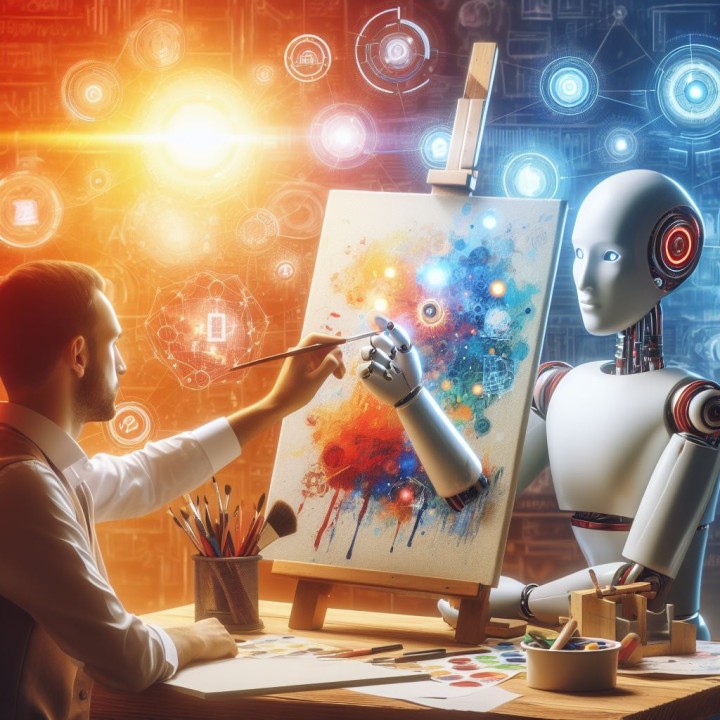
Today, the most impactful creative work isn’t made by AI or without AI — rather, it’s made with AI, guided by human judgment, taste, and intent.
Creativity Was Never About Output — It Was About Insight
Creativity has never been about producing more. In fact it has always been about deciding what matters.
AI excels at:
- Speed and scale
- Pattern recognition
- Generating variations
On the other hand, humans bring:
- Taste and originality
- Emotional intelligence
- Cultural context
- Brand and ethical judgment
AI increases productivity. Ultimately, humans define meaning. Together, that balance is where modern creativity thrives.
AI as a Creative Multiplier, Not a Replacement
In digital media and software teams, AI hasn’t replaced creative roles — rather it has reshaped creative workflows.
From Blank Pages to Smart Starting Points
Similarly, AI enables teams to explore multiple ideas quickly — thereby improving creative confidence and decision-making instead of locking into a single direction too early.
From One Direction to Many Possibilities
Similarly, AI enables teams to explore multiple ideas quickly — thereby improving creative confidence and decision-making instead of locking into a single direction too early.nout.
From Repetitive Tasks to Meaningful Work
In addition, by handling formatting, resizing, variations, and boilerplate tasks, AI frees creatives to focus on storytelling, strategy, and experience design. As a result, the outcome is better work with less burnout.
Popular AI Tools That Help Creatives Work Smarter
AI doesn’t need to be complex to be effective. In reality many creatives already use AI-powered tools in their daily work — often without consciously labeling them as “AI tools.” For example, here are some commonly used, easy-to-adopt tools that support creativity without replacing it:
Writing, Ideas & Communication–
- ChatGPT – Brainstorming ideas, writing first drafts, refining tone, creating scripts, captions, and content outlines.
- Grammarly AI – Improving clarity, grammar, and readability while preserving the writer’s natural voice.
Design & Visual Creation
- Canva (AI features) – Quickly creating social media posts, presentations, and marketing visuals with AI-assisted layouts and copy.
- Adobe Photoshop (Generative Fill) – Speeding up image edits by extending backgrounds, removing objects, and generating visual elements.
Video & Content Editing
- CapCut – Beginner-friendly video editing with AI-powered captions and quick transitions.
- Descript – Editing video and audio simply by editing text, saving hours of manual effort.
Productivity & Creative Organization
- Notion AI – Planning projects, organizing ideas, summarizing notes, and structuring creative workflows.
- Google Docs & Slides (AI features) – Drafting, refining, and collaborating on content more efficiently.
These tools don’t make creative decisions — they remove friction, allowing humans to focus on thinking, storytelling, and originality.
Why Human Creativity Still Matters More Than Ever
AI doesn’t understand:
- Cultural nuance
- Emotional timing
- Brand intent
- When restraint is more powerful than output
Therefore, as AI increases volume, taste becomes the differentiator. In practice, the brands that stand out aren’t the ones using AI the most — rather, they’re the ones using it with clarity and intention.
The Real Risk Isn’t AI — It’s Thoughtless Use
AI becomes dangerous only when used without:
- Clear brand principles
- Human oversight
- Strategic intent
When used carelessly, it creates sameness. When used wisely, it unlocks originality at scale.
Creativity, Upgraded
Every major technological shift once sparked fear. Yet, none erased creativity.
AI is no different.
By removing friction, it allows ideas to move faster.
By expanding possibility, it opens new creative directions.
By demanding better thinking, it pushes humans to be more intentional.
Creativity was never about speed. Ultimately, it was about purpose.
AI didn’t kill creativity. In the end, it finally gave it superpowers.